




European OEMs (Original Electronics Manufacturers) have been facing a dilemma: how to stay cost-competitive while increasing responsiveness, improving sustainability, and ensuring quality. For many, the answer has been nearshoring - bringing production closer to home. As this shift gathers pace, Bulgaria is emerging not just as an affordable option but as a vital European manufacturing hub.
Nearshoring is on the rise
The nearshoring trend has gained serious traction in the electronics manufacturing world, driven by several factors:
- Shorter lead times - Proximity to European markets means reduced shipping times and more agile responses to market demand.
- Sustainability - Reducing reliance on long-haul shipping from Asia cuts carbon emissions - an increasingly important consideration for ESG-conscious OEMs.
- Supply chain resilience - Nearshoring helps mitigate geopolitical and logistical risks by avoiding congested global routes and potential trade barriers.
But where are OEMs moving their production to?
The nearshoring shift is driving steady growth in Europe's EMS (Electronics Manufacturing Services) market.
In particular, Central and Eastern Europe (CEE) is seeing growing demand from OEMs seeking cost-effective, technically capable EMS partners within the EU. And Bulgaria is one country gaining attention as a reliable location for outsourced electronics manufacturing.
Before we take a deep dive into Bulgaria, let's take a step back and explore where else in Europe OEMs are choosing to outsource to.
Key European destinations for outsourced manufacturing
1. Czech Republic - Technically strong, centrally located
With its central position in Europe, well-developed industrial base, and reputation for high-quality engineering, the Czech Republic is a natural choice for OEMs looking to outsource manufacturing within the EU. The country has particular strengths in electronics, automotive, and precision engineering, and offers excellent transport links across the continent.
2. Switzerland - Precision manufacturing at its best
Switzerland remains a premier destination for outsourcing highly regulated or technically demanding products. Known for precision, quality, and compliance, it’s often the go-to location for manufacturing medical devices, instrumentation, and other complex industrial products.
3. Poland - Scale and access to talent
Poland is one of Europe’s largest manufacturing hubs and continues to attract OEMs thanks to its strong industrial infrastructure, cost-competitive labour, and proximity to Western European markets. It’s well-suited for high-volume, cost-sensitive production and is supported by a large ecosystem of EMS providers.
4. Romania & Hungary - Fast-growing outsourcing hubs
These two countries are increasingly popular nearshoring destinations for outsourced manufacturing. They offer competitive labour costs, strong regional logistics, and expanding electronics and automotive industries. Many OEMs view them as viable alternatives or complements to established manufacturing bases like the Czech Republic and Poland.
5. Southern Europe - Niche opportunities
Countries like Spain and Portugal are seeing growing interest in sectors such as EVs, renewable energy, and aerospace. With improving logistics networks and strong engineering talent, they’re an attractive option for OEMs looking to diversify their European manufacturing footprint.
Bulgaria in focus: From transition economy to trusted manufacturing base
Emerging from behind the Iron Curtain in 1989 and joining the EU in 2007, Bulgaria has undergone a major transformation, from low-cost outpost to credible European manufacturing partner.
Today, it has a strong industrial foundation, particularly in electronics, automotive components, and precision engineering, and is firmly embedded in EU supply chains. For OEMs seeking trusted EMS partners within Europe, Bulgaria provides a mature, well-connected, and strategically located manufacturing environment.
Which countries have strong links with Bulgaria - and who’s using it for electronics production?
Bulgaria has become a key electronics manufacturing base for European OEMs, particularly in the automotive and industrial sectors. It plays a strategic role in EU supply chains, serving both Western and Eastern European markets.
-
Germany is Bulgaria’s top trade partner for electronics and industrial components, with strong links in automotive electronics - notably sensors, of which 80% of Europe’s car sensors are produced in Bulgaria.
-
Other Western European countries, such as France, Italy, and the Netherlands, use Bulgarian facilities for component manufacturing, especially in sectors like industrial automation and energy.
-
Eastern Europe, including Romania, Poland, Czech Republic, and Serbia, also relies on Bulgaria as a regional production base, benefiting from shared logistics corridors and cost-effective assembly capacity.
-
Major manufacturers like Schneider Electric (France) and Melexis (Belgium) have made significant investments in Bulgarian smart factories and R&D, underlining confidence in local capabilities.
-
US companies are increasingly present in Bulgaria’s R&D ecosystem, though electronics exports to the U.S. remain niche and specialised (e.g., coins, medical instruments).
These international connections highlight Bulgaria’s embedded role in European electronics production and its growing appeal to OEMs looking to outsource within the EU.
According to InvestBulgaria, 80% of sensors in European cars are now made in Bulgaria. Melexis launched R&D facilities in Sofia to combat the effects of global chip shortage and Schneider Electric announced a new big investment in its smart factory in Plovdiv.
Source: The Recursive
So, what makes Bulgaria such an attractive choice for outsourced electronics manufacturing?
7 benefits of outsourcing your electronics manufacturing to Bulgaria
Bulgaria offers a combination of advantages that are hard to beat for OEMs looking to outsource low-to-medium volume, lower-complexity products, such as PCBA assemblies, devices with a display and a plastic housing, or integrated box builds.
1. Strategic location
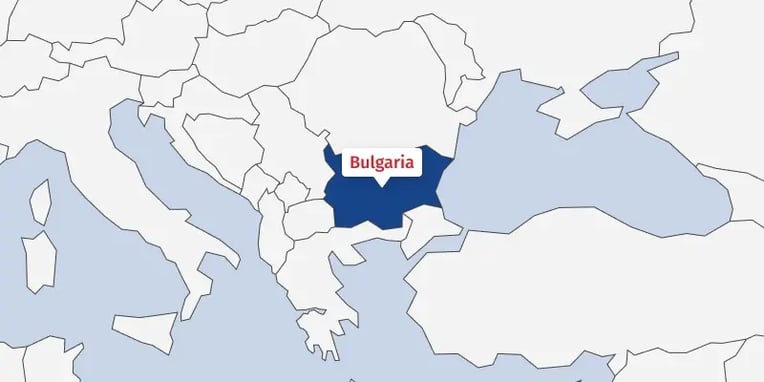
Bulgaria's strategic position in Southeast Europe offers seamless access to both European and Asian markets. This location is ideal for ensuring timely delivery of components and finished products within the EU and to the East, facilitating faster time-to-market. The country boasts a robust transport infrastructure, including major Black Sea ports, international airports, and an extensive network of road and rail systems, which support efficient logistics and supply chain management.
2. Competitive labour costs, skilled workforce
According to Eurostat, Bulgaria has some of the lowest labour costs in Europe, making it an attractive option for cost-effective manufacturing without compromising on quality. The country offers a well-educated and skilled workforce (many of whom are English-speaking), particularly in technical and engineering fields, ensuring high standards of manufacturing.
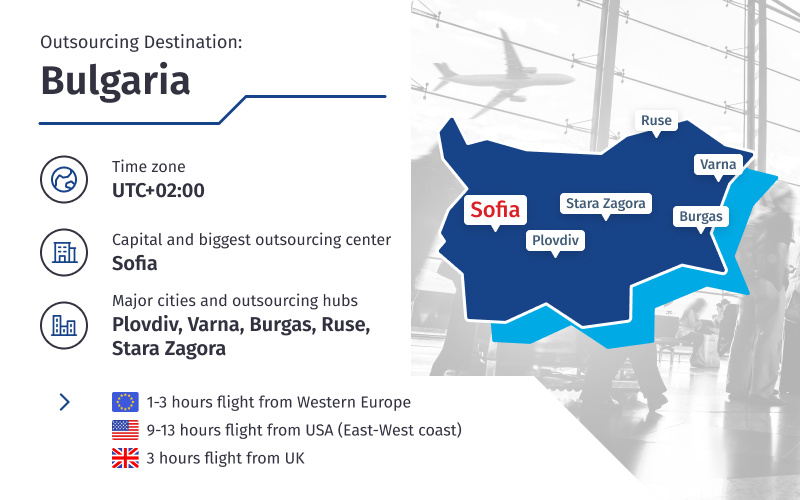
Interestingly, Bulgaria has a strong tradition in electronics, dating back to the Cold War when it supplied computer chips to the Soviet Union. That legacy has evolved into a dynamic, innovation-driven sector supported by a new generation of technically skilled graduates. This is especially evident in cities like Plovdiv, the country's second-largest city, which is home to several STEM-focused universities.
3. Favourable business environment
Bulgaria’s tax regime has many benefits for manufacturing companies. Currently, it boasts a flat corporate tax rate of 10%, intended to stimulate continued internal investment in facilities and capabilities. Various government incentives are in place to attract foreign investors and encourage them to bring capital into the country, taking advantage of its strategic location to expand their access to key markets.
4. EU membership
Bulgaria’s EU membership offers all the advantages of access to the single market with reduced trade barriers, facilitating smoother business operations across Europe. Manufacturing processes meet high EU quality standards, reducing trade friction and the risk of non-compliance and product recalls.
5. Industrial infrastructure and growth potential
Bulgaria has established several industrial and economic zones designed to attract foreign investment and support manufacturing operations. These zones come with ready-to-use infrastructure, including modern facilities, utilities, and transport links.
The Trakia Economic Zone (TEZ) is one of the largest in Bulgaria, offering comprehensive infrastructure and services to businesses, including pre-built facilities and access to utilities.
Additionally, industrial zones offer incentives such as tax breaks, grants, and support services, making it easier for companies to scale their operations and improve efficiency without significant capital investment.
When in 2000 we chose the TEZ as the location for our plant, several factors were taken into account. Firstly, the availability of highly qualified personnel who have technical education, the presence of suppliers for future production, the competitive cost of labour and the opportunity to conquer new markets.
Radoslav Koshkov, Vice President LifeSpace Business, Schneider Electric
6. Innovation and technology
Bulgaria’s industry clusters play a key role in driving collaboration and innovation. These ecosystems bring together companies, research institutions, and other stakeholders across sectors such as automotive, electronics, and IT.
Ongoing investment in R&D is helping to modernise manufacturing processes and accelerate the development of advanced products. Access to technology parks, incubators, and innovation centres supports continuous improvement across facilities and capabilities.
Plovdiv, in particular, is a standout for manufacturers, with its technically skilled workforce and excellent transport links providing an ideal base for distributing products across the EU.
7. Energy efficiency and low utility costs
Electricity in Bulgaria is cheaper than the EU average, which helps maintain competitive production expenses. The country is also moving aggressively toward renewable energy adoption, which further reduces production costs while helping OEMs meet ESG targets.
The National Recovery and Resilience Plan ('NRRP') of Bulgaria aims to invest in renewables, targeting 30% renewable energy by 2030. The Bulgarian climate lends itself well to a solar future. And the Trakia Economic Zone is looking to become carbon neutral by 2040, a pace of change which could be accelerated with more investment and pressure from external players.
What about the drawbacks of outsourcing to Bulgaria?
Bulgaria may still be less familiar to some procurement teams than the Czech Republic or Poland. Concerns might include:
- Language barriers (though many technical professionals speak fluent English)
- Distance from Western Europe (though shorter than Asia, and well-connected)
- Perceptions of bureaucracy (which are increasingly outdated due to EU integration and industrial zone support)
But this is where working with an established EMS partner becomes essential.
Why Bulgaria works best when you’re not alone
Choosing the right manufacturing partner is key, especially in a less familiar market.
ESCATEC’s Bulgarian facility is part of a broader European and global network, including sites in Switzerland, the Czech Republic, and the UK, backed by over 40 years of manufacturing excellence.
This means:
- Flexibility and resilience - Work can be transferred between sites if needed.
- Shared best practices - Group-level systems and quality control standards.
- Design support - Access to global DFM, prototyping and NPI expertise.
- Familiarity with European standards - Including ISO certifications and traceability systems.
Think the benefit of nearshoring, plus the added safety net of a global EMS partner that knows how to manage complexity, scale smartly, and adapt quickly.
Ready to nearshore smarter?
For OEMs in the electronics industry looking to shore up their supply lines and distribution capabilities in the EU, choosing a manufacturing partner with a footprint in Bulgaria makes a lot of sense.
Get in touch to discover how ESCATEC Bulgaria can support your next project and become your low-risk, high-reward EMS partner in Europe.

FAQs
1. Why are OEMs choosing Bulgaria to outsource electronics manufacturing?
Bulgaria offers a compelling mix of competitive labour costs, EU single market access, and geographic proximity to Western Europe. These advantages enable reduced logistics costs, faster time to market, and better supply chain responsiveness - especially compared to offshore alternatives. At ESCATEC, our Bulgarian facility builds on these location benefits by embedding the same quality systems, engineering support, and operational rigour used across our global network, ensuring a seamless extension of your manufacturing strategy.
2. Will nearshoring to Bulgaria improve our supply chain resilience?
Yes - moving production closer to your key markets reduces lead times, improves agility, and helps mitigate global supply chain risks. With ESCATEC, you also gain the backing of a wider European and global network. Our Bulgarian facility is part of a multi-site operation, meaning production can shift if needed, best practices are shared across regions, and you're supported by decades of EMS experience - all of which adds a layer of resilience beyond location alone.
3. Is IP protection a concern when outsourcing to Bulgaria?
As an EU member state, Bulgaria follows strict IP and data protection regulations that align with international standards. It offers a secure legal framework for safeguarding sensitive technologies and proprietary designs. ESCATEC reinforces this protection with robust internal controls, including NDA-backed processes, access-restricted data environments, and a culture of confidentiality that’s consistent across all our locations.


